Somewhere between an afternoon nap and a decade of meditation practice sits a strange middle ground: seven minutes, a pair of headphones, and a track built entirely out of sound. That's the pitch behind the Quantum Brainwave Protocol, a downloadable audio program promising sharper focus, easier sleep, and a level of mental clarity most people associate with years of disciplined practice. This review breaks down the audio engineering behind it, the science it borrows from, what a real week of daily use looks like, and whether it's worth the asking price.
Individual response to audio entrainment varies, and no honest assessment can promise identical results for every listener.
"I was skeptical the whole first week, it just felt like seven minutes of ambient noise. By week three I noticed I wasn't reaching for my phone every ten minutes at my desk anymore. Small change, but a real one."
"The sleep track is the one that actually got me. I fall asleep faster than I used to and I'm not scrolling in bed anymore because I'm too relaxed to bother. The focus track is fine, just less dramatic for me personally."
"Bought this mostly out of curiosity after seeing an ad twice too many times. Didn't expect to keep it in my morning routine a month later, but here we are. Seven minutes really is short enough that I don't skip it."
It is a downloadable audio program built around one central idea: instead of training your mind toward a calmer, sharper state through weeks of meditation practice, you let a purpose built sound file do most of the work for you. There's no app to master, no breathing pattern to memorize, and nothing to swallow. You put on headphones, press play on a single track, and let the audio run for seven minutes.
Structurally, it's a set of digital audio files, delivered as MP3 or WAV downloads immediately after purchase, rather than a physical product or a supplement. That distinction matters, because it means the entire value lives in the sound engineering itself: how precisely the frequencies are layered, how consistently they're reproduced, and whether the underlying premise holds up under normal daily use.
The program is positioned as an entry point into brainwave entrainment for people who have tried and abandoned traditional meditation, or who simply don't have twenty quiet minutes to spare every morning. Whether it can genuinely replace years of practice is a fair question, and it's one this article will answer honestly rather than with marketing language.

To understand what you're actually buying, it helps to separate the real science from the marketing gloss. It leans on a genuine, decades old field of audio research, but like most products in this category, it stretches that research further than the evidence strictly supports.
Your brain constantly produces low voltage electrical activity that moves faster or slower depending on what you're doing. Brainwave entrainment is the observed tendency of that rhythm to gradually shift toward an external stimulus, in this case, a repeating audio pattern. It's a real, studied phenomenon, not a term this program invented. The open question is how reliably a seven minute commercial track can produce a lasting shift for any given listener.
The core audio technique used throughout the program is the binaural beat: two slightly different tones, one played in each ear. Your brain perceives the mathematical difference between them as a third, phantom rhythm, and brain activity has been shown in EEG research to drift toward matching that rhythm over time. Engineers call this the frequency following response, the same principle used across most binaural beat audio, not something proprietary to this program.
The flagship track is tuned specifically as theta wave audio, targeting the 4–8Hz range associated with daydreaming and the loose, associative thinking that tends to produce creative insight. Theta sits below the alert, thinking heavy beta range but above the deep sleep delta range, the frequency most brainwave audio products reach for when the goal is calm and present rather than unconscious.
Stereo separation is required for binaural beats to register correctly, speakers won't reproduce the effect.
No visualization or breathing technique is required, the listening itself is the entire practice.
Most reported shifts in focus or sleep onset build gradually over one to three weeks of daily use.
The now famous 7 minute length isn't an arbitrary number picked for marketing punch, it's a deliberate adherence strategy. A twenty minute meditation is easy to skip on a busy morning; seven minutes survives a packed schedule, and consistency is what most entrainment research points to as the real driver of any cumulative effect.
Strip away the sales page and the package is straightforward: a small library of audio files plus a short instructional guide.
This is the flagship file and the one referenced in most of the marketing, the theta tuned track designed for daily morning or midday use, aimed at focus, mental clarity, and reducing background mental noise.
A longer, slower tempo file that shifts target frequency toward the delta range, meant to be played at low volume while lying in bed. This is the track many listeners may find especially noticeable, likely because falling asleep faster is easier to self report than a subtle daytime focus shift.
A shorter supplementary file, often the most speculative of the bundle, aimed at boosting drive and confidence before a demanding task. It leans more on motivational framing than on hard entrainment science, and is best treated as a mindset primer rather than a guaranteed mechanism.
A short PDF or digital document covering setup, recommended listening times, headphone requirements, and a simple tracking sheet so you can note focus, sleep, and mood day to day.
Every claim made about this program traces back to a handful of concrete design choices. Here's what actually makes it up.
Seven minutes is short enough to fit before coffee finishes brewing, which removes the single biggest reason people quit meditation style practices: not having time. There's no expectation of a quiet hour or a dedicated room.
Rather than a single tone pair, the tracks layer binaural beats with pulsed isochronic tones and ambient sound beds, which is intended to make the frequency shift more perceptible without the track feeling clinical or harsh to listen to.
You don't need to "get good" at this the way you do with breath focused meditation. The audio does the work passively; your only job is to keep the headphones on and stay reasonably still.
Beyond the flagship focus track, the program bundles a dedicated sleep track and a shorter motivation oriented track, so the frequency target changes depending on what time of day you're listening and what you're trying to achieve.
Because it's 100% digital, there's no shipping wait. Files land in your inbox within minutes of checkout and can be moved to a phone, tablet, or laptop immediately.
Unlike many meditation and wellness apps that bill monthly, it's sold as a single one time purchase. Once downloaded, the files are yours to keep with no recurring charge.
Individual response to audio entrainment varies, and no honest assessment can promise identical results for every listener. That said, these are the benefits most consistently associated with regular use.
The most commonly reported shift is a reduction in mental "background noise", fewer stray thoughts pulling attention away from the task at hand, particularly during afternoon slumps.
Users of the dedicated sleep track frequently describe falling asleep somewhat faster and waking less during the night, which lines up with the general research on slower frequency audio and sleep onset.
Shifting away from beta dominant brain activity, even briefly, is associated with a calmer subjective state. Several users describe the seven minutes as functioning like a short, structured decompression break.
Theta adjacent states are where loose, associative thinking tends to happen, the kind that produces unexpected connections between ideas. Some listeners use the track specifically before creative work sessions for this reason.
Because the time commitment is so low, this program tends to survive busy weeks in a way that twenty minute meditation routines often don't, a habit you actually keep beats a better habit you abandon after ten days.
Because the practice is entirely passive listening, there's no frustrating beginner period where you feel like you're "doing it wrong", a common reason people give up on traditional meditation within the first week.
Brainwave audio isn't a new category, free binaural beat tracks have existed on YouTube for years, and meditation apps have dominated the wellness space for a decade. So why pay for a packaged program instead of using what's already free?
The honest answer is production consistency and structure. Free YouTube tracks vary wildly in audio quality, frequency accuracy, and length, with no guide telling you which one to use for sleep versus focus. Meditation apps solve the structure problem but demand a much larger time investment and often carry an ongoing subscription fee. This program sits in the middle: professionally produced, organized by purpose, purchased once, and built around a session length most people will actually keep doing.
This program is currently backed by a 60 day refund window from the date of purchase. If, after a genuine daily trial, you don't notice the shift in focus or sleep you were hoping for, request a full refund through the order support contact in your purchase confirmation email.
In practice, this turns the purchase into something closer to a two month trial with a safety net attached, rather than a locked in, all sales final decision, which matters given how much individual response to binaural audio can vary.
A genuine, honored refund policy is itself a reasonable signal of legitimacy, outright scams rarely offer a straightforward 60 day window with no hoops to jump through.
Order With ConfidencePricing is set as a one time promotional cost. Always confirm the live number on the official website before checkout, treat these figures as directional, not guaranteed.

Buying anywhere other than the official checkout, including third party resale listings, voids the refund guarantee and risks receiving incorrectly mastered audio files.
This is the question most people actually type into a search bar, so it deserves a direct answer: it's a real, actively sold digital product, not vaporware, built around a legitimate, decades studied audio principle, even though, like every product in this category, it presents that science with more confidence than the research fully supports.
Where buyers run into trouble is counterfeit or repackaged copies on third party marketplaces, sold without correct frequency mastering and without refund protection. The safest path is purchasing through the Quantum Brainwave Protocol official website, the only place that guarantees properly mastered files and the money back window described below.
Because this is audio, not a substance, the safety profile is fundamentally different from a supplement, but it isn't automatically risk free for every listener. Reported Quantum Brainwave Protocol side effects are generally mild and short lived: brief lightheadedness during the first session or two, mild ear fatigue if the volume is too high, and occasionally more vivid dreams after the sleep track, which normalizes within a week.
A few groups should check with a doctor first: anyone with epilepsy or a seizure disorder, anyone with a pacemaker, anyone managing a serious psychiatric condition, and pregnant listeners, as a general precaution. Never listen while driving or operating machinery, the intended effect is a drop into a more relaxed, less alert state, which is the opposite of what you want behind the wheel.
Everything most people search for before buying, answered directly.
It's a downloadable audio program built on binaural beats and brainwave entrainment, centered on a 7 minute daily track designed to nudge the brain toward a calmer, more focused theta adjacent state.
The underlying audio science is real, and many listeners report gradual improvements in focus and sleep onset after two to four weeks of consistent use, but a meaningful percentage of people don't respond strongly to binaural audio at all, a documented pattern across this whole category.
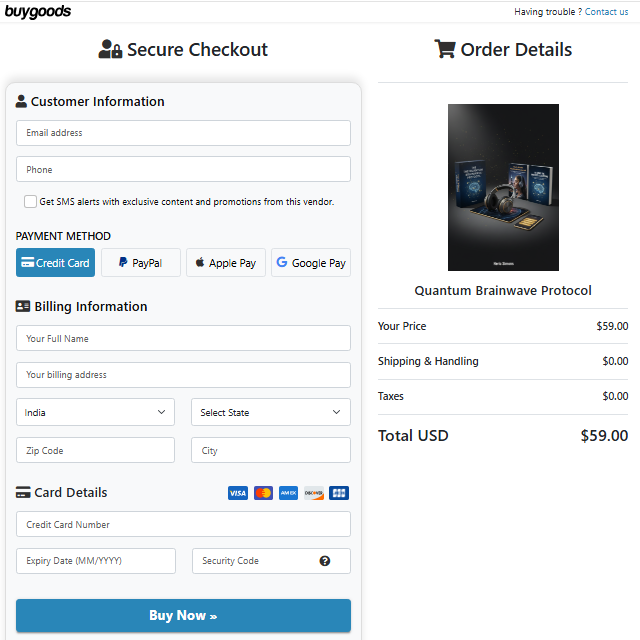
Current promotional pricing is $59, listed as today's public awareness price. It's a one time purchase, no recurring subscription, though the seller can adjust pricing at any time.
Always purchase through the Quantum Brainwave Protocol official website to guarantee correctly mastered audio files and access to the refund window, third party resale listings are not covered by the guarantee.
Most reported effects are mild and temporary: brief lightheadedness in the first session or two, mild ear fatigue at high volume, and occasionally more vivid dreams after the sleep track. Anyone with epilepsy, a pacemaker, or a serious psychiatric condition should check with a doctor first.
No special model is required, but stereo headphones or earbuds are necessary, binaural beats rely on each ear receiving a slightly different tone, which speakers can't reproduce.
Most listeners who respond report noticing something between weeks two and three of daily use, with effects becoming more consistent by week four.
Not exactly. Meditation is an active practice you build skill in over time; this is passive listening. Some use it as a lower effort substitute, others pair it with an existing meditation practice.
The sleep track is longer and tuned toward the slower delta range for use in bed; the primary focus track is the 7 minute theta tuned session for daytime use.
Both, the tracks layer binaural beats with pulsed isochronic tones and ambient sound to make the frequency shift more perceptible.
The flagship track is built as theta wave audio, targeting the roughly 4–8Hz range associated with relaxed, associative thinking and light creative flow.
It's the documented tendency of brain activity to shift toward the rhythm of a repeating external stimulus, studied in EEG research for decades, real, though evidence on outcomes from any single commercial product is mixed rather than settled.
A 60 day money back guarantee currently applies from the date of purchase, handled through the order support contact in your confirmation email.
Mild, occasional stress or sleep onset trouble is generally fine to explore, but it isn't a substitute for treating a diagnosed condition, talk to your doctor first if you're managing a clinical diagnosis.
It's designed and marketed for adult use; there's no established safety data for children, so it isn't recommended for younger listeners.
Choose your package and click through to the secure checkout page.
Your download link and receipt are sent to the email you provide.
Complete payment through the encrypted checkout, a one time charge, no subscription.
Files land in your inbox within minutes and can be moved to any device immediately.
One time payment transparency: because it's 100% digital, there's no shipping wait, this is an instant access digital download, not a subscription and not a physical product.
All transactions are processed through an encrypted, secure checkout. Your payment details are never stored on our servers.
Backed by a 60 day money back guarantee from the date of purchase. If a genuine daily trial doesn't deliver the shift you were hoping for, request a full refund.
Questions about your order or the refund process? Reach the order support team any time.

After breaking down the science, the packaging, and the realistic timeline, it lands as a genuinely reasonable low risk purchase for the right person, a legitimately engineered audio tool sitting on real, if imperfect, research.